
Cash Offers · · 11 min read
Tarek’s California Distressed Debt Playbook: How to Pivot When Your Mortgage is Underwater in 2024
 Tarek El Moussa · Host of HGTV's Flip or Flop · 20+ Years in Real Estate
Tarek’s California Distressed Debt Playbook: How to Pivot When Your Mortgage is Underwater in 2024
I still remember the pit in my stomach back in 2008. I was young, I had just started making real money in real estate, and then the world collapsed. I went from driving a custom lifted truck and living in a big house to wondering how I was going to pay for a $5 footlong subway sandwich. I didn’t just lose my shirts; I lost the whole closet. That experience—the stress of being underwater and the fear of the bank calling—is exactly why I do what I do today.
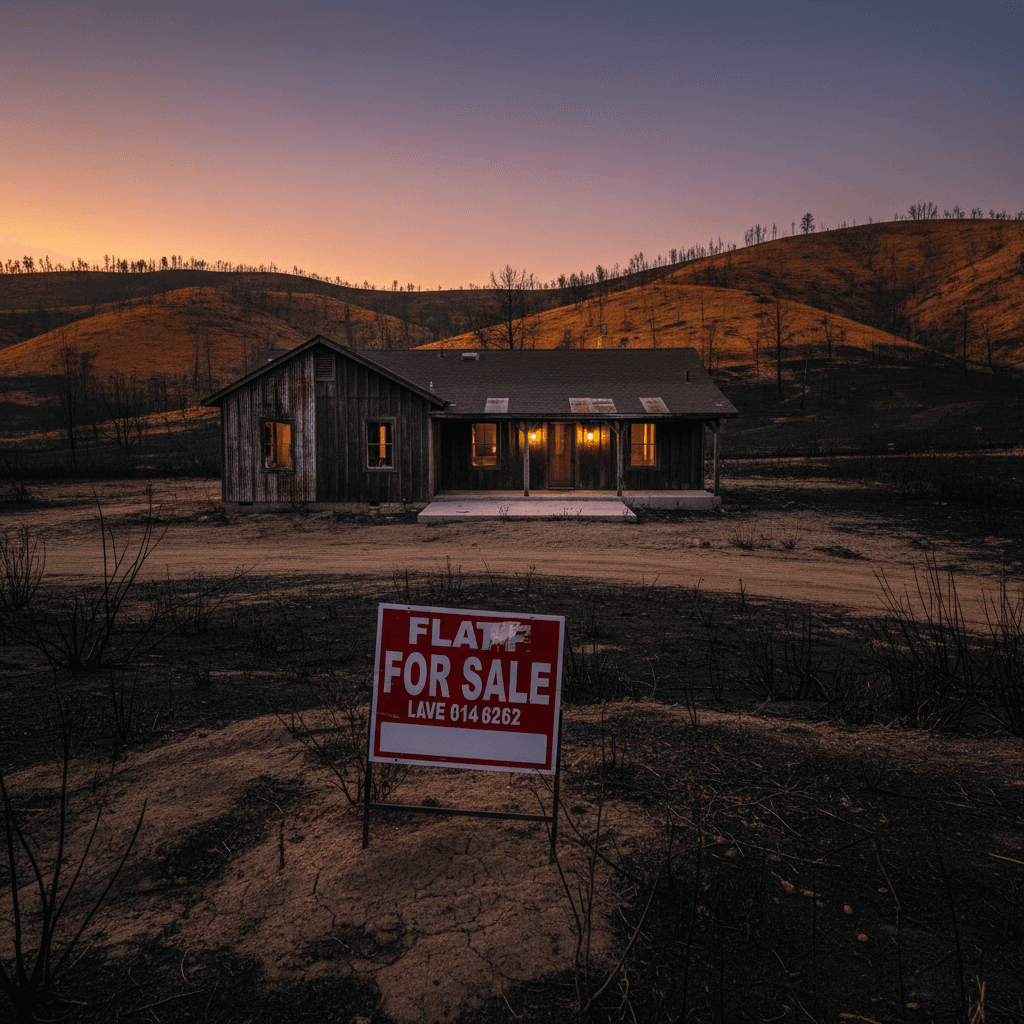
The Reality of the 2024 California Market
Look, I’ve filmed over 10 seasons of Flip or Flop and coached hundreds of students on Flipping 101. If there is one thing I’ve learned from over 1,000 transactions, it’s that the market doesn’t care about your feelings. Right now, California is in a weird spot. We have high interest rates, cooling prices in some areas, and a lot of homeowners who bought at the peak in 2021 or 2022 who are now looking at their mortgage balance and realizing it’s higher than what their neighbor just sold for.
Being "underwater" or having "negative equity" feels like being trapped in a room with the walls closing in. But I’m here to tell you: Equity isn't the only way out. I’ve built a career on finding the "pivot." When the standard way of selling doesn't work, you have to look at the playbook I use for distressed debt.
Step 1: The Brutal Honest Audit
Before you panic, you need the numbers. When I’m looking at a potential flip, I don’t guess. I look at the "hard ARV" (After Repair Value). You need to do the same for your current situation.
- Get your exact payoff: Not the balance on your statement, but the payoff amount, which includes accrued interest.
- Run real comps: Don't just look at Zillow. Look at what has actually closed in the last 60 days within a half-mile radius.
- Factor in selling costs: If you sell the traditional way, you’re losing 5-6% to commissions and another 1-2% to closing costs.
If your payoff is $600,000 and the house is worth $580,000, you aren't just $20,000 underwater. After commissions, you’re closer to $60,000 in the hole. That’s the number we have to solve for.
Step 2: The Strategic Pivot Options
When you’re underwater, you have four main "plays." Most people only know about two of them, and usually, those are the ones that hurt your credit the most.
The Short Sale (The Long Game)
This is where we negotiate with your bank to accept less than what is owed. I did hundreds of these during the Great Recession. The bank isn't doing you a favor; they are making a business decision to avoid the cost of a foreclosure. It’s a grueling process, but it saves your credit from the "F-word" (Foreclosure).
The "Subject-To" Sale
This is a sophisticated move where a buyer takes over your payments. If you have a 3% interest rate from 2021, that debt is actually an asset to an investor like me, even if the equity is zero. We can sometimes sell your house fast in Los Angeles by leveraging that low-interest debt, which allows us to pay more than a traditional buyer could.
The Cash Infusion Exit
Sometimes, you just need to walk away with your dignity and your credit intact. This is where a professional cash buyer comes in. We look at the debt, the repairs needed, and the timeline. In places like Fresno, where market shifts can happen fast, a quick cash exit can stop the bleeding before the bank starts the legal process.
Pro Tip: Never ignore a notice from your lender. The second you get a "Notice of Default," your options start shrinking by the day. Speed is your only leverage.
Step 3: Understanding the California Foreclosure Timeline
California is a non-judicial foreclosure state, which means the bank doesn't have to take you to court to kick you out. Once you miss three payments, they typically issue a Notice of Default (NOD). You then have 90 days to "cure" the debt. If you don't, they issue a Notice of Sale.
I’ve seen families in Stockton wait until the week of the auction to call me. At that point, my hands are almost tied. If you are in the 90-day NOD period, that is your "Golden Window" to pivot.
Why 2024 is Different

In 2008, every house was losing value. In 2024, the market is "sticky." Inventory is low, which is keeping prices from plummeting, but high rates are keeping buyers away. This creates a "stagnation trap." You can’t sell for a profit, but you can’t afford to stay if your life circumstances have changed (job loss, divorce, or relocation).
If you’re trying to sell your house fast in San Bernardino, you’re competing with new builds that are offering massive rate buy-downs. A regular homeowner can’t compete with that. You need an off-market solution.
"In real estate, you don't make money when you sell; you make money when you buy. But when you're the seller, you survive by how fast you can adapt to the truth." — Tarek El Moussa
Common Mistakes I See Homeowners Make
- The "Ostrich Effect": Burying your head in the sand. I’ve been there. You stop opening the mail. You stop answering the phone. This is the fastest way to lose everything. The bank is a machine; it won't stop unless you engage.
- Over-Improving for the Sale: I see this all the time on Flipping 101. A homeowner is $10k underwater, so they spend $20k on a kitchen remodel thinking it will add $50k in value. In a down market, you rarely get a 1-to-1 return on renovations. You’re just digging a deeper hole.
- Hiring a "Hopeful" Agent: Many agents will tell you they can get a high price just to get the listing. If you’re underwater, you don't need hope; you need a strategy. If the house sits on the market for 90 days in Sacramento, you’ve just lost three more mortgage payments and your equity has dropped even further.
- Waiting for a Market Miracle: Rates might drop, but they won't go back to 2.5% anytime soon. If you are underwater today, waiting six months might just mean you owe six months more of interest and late fees.
Distressed Debt FAQ
The Tarek El Moussa Approach: A Way Out
I’ve been at the top, and I’ve been at the bottom. I know what it’s like to look at a beautiful house and only see a massive debt. But I also know that there is always a way to pivot. Whether you are in Los Angeles or Stockton, the math works the same way.
If you are tired of the sleepless nights, tired of the phone calls, and tired of feeling like your house is an anchor dragging you down, let’s talk. My team and I specialize in the "hard" deals. We don't just look for the pretty houses; we look for the problems we can solve.
You don't have to let a bad mortgage ruin your next ten years. You can take control, make a move, and start over with a clean slate. I did it, and you can too.
Ready to see your options?
Don't wait for the bank to make the first move. Visit tarekbuyshouses.com today or call us at (866) 407-3411. We’ll give you a fair, no-obligation cash offer and help you navigate the pivot. Let’s get you back on your feet.
Final Thought: The market moves fast, but I move faster. Let’s get to work.
Disclaimer: Tarek El Moussa is a licensed real estate agent and professional investor. This blog post is for informational purposes and does not constitute legal or financial advice. Always consult with a professional regarding your specific financial situation.
Frequently Asked Questions
Is a short sale better than a foreclosure?
Absolutely. While both will impact your credit score, a foreclosure is often viewed as a "cardinal sin" by future lenders and can stay on your record for seven years, often preventing you from buying another home for a long time. A short sale shows that you worked with the lender to mitigate their loss. In many cases, you can qualify for a new mortgage in as little as two years after a short sale, whereas a foreclosure might keep you on the sidelines for five to seven years. Plus, a short sale gives you more control over the moving process.
How does "Subject-To" work for an underwater homeowner?
This is one of my favorite tools. In a "Subject-To" transaction, an investor buys the property "subject to" the existing mortgage. The deed transfers to the buyer, but the loan stays in your name. The buyer then makes the monthly payments. For an underwater homeowner, this can be a lifesaver because it stops the late payments from hitting your credit and avoids a foreclosure. It requires a high level of trust and a very specific legal contract, which is why you should only do this with experienced professionals who have the funds to ensure those payments are made every single month.
Will the bank come after me for the difference?
This is called a "deficiency judgment." In California, most residential foreclosures are non-judicial, and the law generally prohibits lenders from seeking a deficiency judgment on "purchase money" loans (the loan you used to buy the house). However, if you refinanced or took out a HELOC (Home Equity Line of Credit), you might be at risk. This is why it’s critical to have a professional negotiator involved in your sale to ensure that the "Full Satisfaction of Debt" is written into the closing documents.
How fast can a cash offer close if I’m facing foreclosure?
If the title is clear and we aren't doing a long-term short sale negotiation, we can often close in as little as 7 to 10 days. The biggest hurdle is usually getting the payoff demand from your lender. If you’re in a city like Sacramento, where the market is moving fast, we can move even faster to beat the auction date. The key is to start the process before the bank schedules the "Trustee Sale." Once that date is set, the clock is ticking loudly.
What is the first step I should take?
The first step is a "No-Judgment Consultation." You need to talk to someone who isn't the bank and isn't a family member who might judge your situation. You need a cold, hard look at the numbers. We provide a free valuation and a breakdown of your options—whether that's a cash offer, a short sale, or even staying in the home if we can find a way to make it work. Knowledge is the only thing that kills the fear of being underwater.