
Market Trends · · 12 min read
Tarek’s California Rescue Plan: Why Waiting for a Market 'Cool Down' is Costing Distressed Homeowners Their Equity
 Tarek El Moussa · Host of HGTV's Flip or Flop · 20+ Years in Real Estate
Tarek’s California Rescue Plan: Why Waiting for a Market 'Cool Down' is Costing Distressed Homeowners Their Equity
I remember sitting in my car in 2008, staring at a foreclosure notice on a house in Santa Ana, feeling the absolute weight of the world on my shoulders. The market wasn’t just "cooling down"—it was falling off a cliff, and I watched millions of dollars in equity evaporate for families who thought they had all the time in the world. Today, I see that same "wait and see" hesitation creeping back into the California market, and honestly, it keeps me up at night because I know how this story ends for people who wait too long.
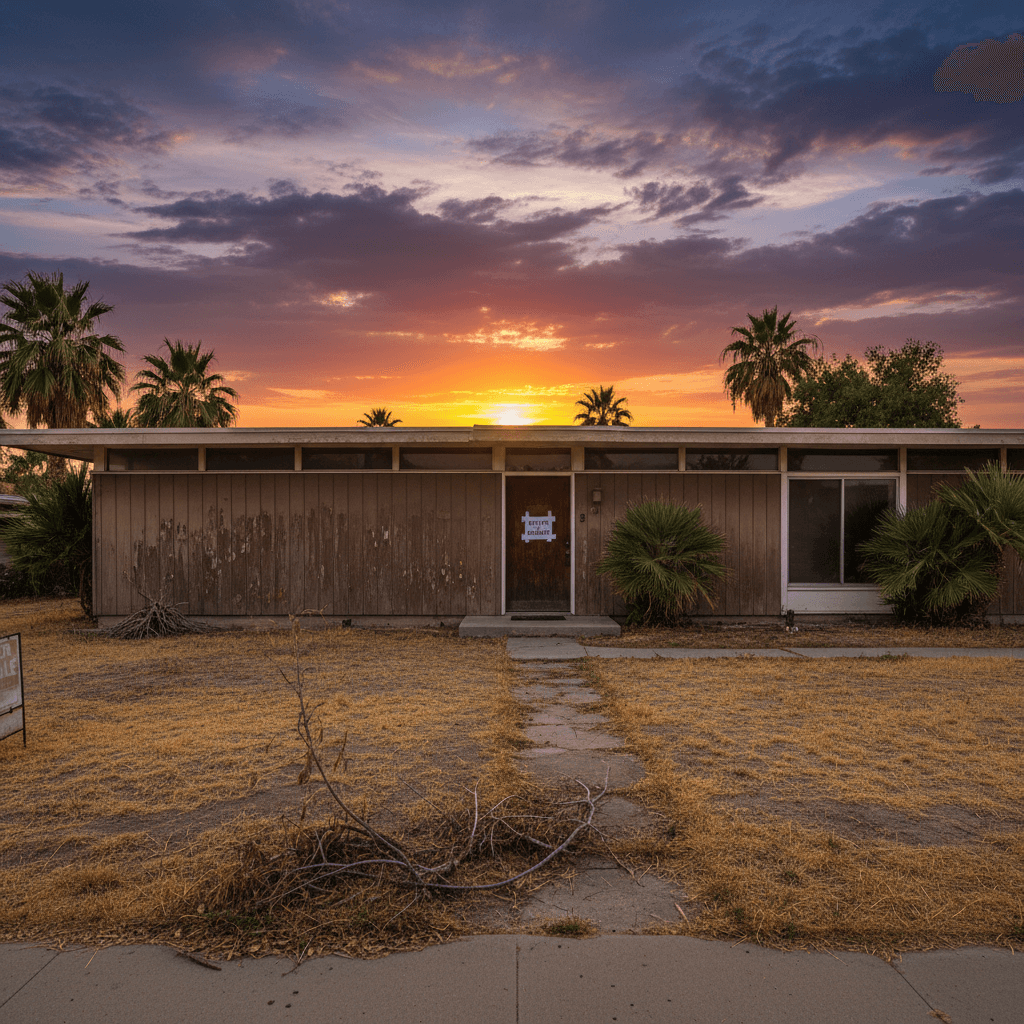
The "Wait and See" Trap: Why Timing the Market is a Losing Game
Look, I’ve flipped over 1,000 houses. From the early days of Flip or Flop to helping new investors on Flipping 101, I’ve seen every cycle imaginable. Right now, I’m talking to homeowners every day who tell me, "Tarek, I’m just going to wait until interest rates drop," or "I’ll wait for the spring market to see if prices go up."
Here is the cold, hard truth: Waiting is a gamble you usually lose when you’re in a distressed situation.
If your house needs $50,000 in repairs, or you’re falling behind on payments, the market isn't your friend—time is your enemy. In California, property taxes, insurance premiums, and maintenance costs are skyrocketing. If you wait six months for a "better market," but you spend $15,000 on holding costs and the market only goes up 1%, you’ve actually lost money. You’re not just waiting; you’re bleeding equity.
The Reality of the California Market in 2024 and Beyond
California is a beast of its own. We have some of the highest entry points in the country, which means when the market shifts even a little bit, the dollar amounts are massive.
Take a look at what’s happening in different pockets. If you’re trying to sell your house fast in Los Angeles, you’re dealing with ULA taxes and a buyer pool that is getting squeezed by high mortgage rates. Meanwhile, if you’re looking to sell your house fast in Bakersfield, the inventory levels are shifting, and buyers are becoming much more pickier about condition.
"In real estate, your first loss is your best loss. If you're in a bad situation, the longer you stay, the deeper the hole gets. Equity is like ice—it melts if you don't protect it." — Tarek El Moussa
When the market "cools," it doesn't mean prices just stop growing. It means buyers gain leverage. They start asking for credits, demanding new roofs, and walking away over minor inspection issues. For a distressed homeowner, a "cool market" is a nightmare scenario because you don't have the cash to make the house "perfect" for a retail buyer.
The Hidden Costs of Holding a Distressed Property
Most people only look at the sales price. I look at the Net Proceeds. That is the only number that matters. Let’s break down what it actually costs to hold onto a house in California while you "wait for a better time":
- The "California Tax": Between property taxes and the recent surge in homeowners' insurance (if you can even get it), you’re likely paying 1.5% to 2% of the home's value annually just to keep the lights on.
- Deferred Maintenance Multiplier: A small leak today is a $10,000 mold remediation project in four months. Houses don't get better sitting empty or neglected; they get exponentially more expensive to fix.
- Opportunity Cost: If you have $100,000 in equity locked in a house you can't afford to fix, and you wait a year to sell, that $100,000 could have been working for you elsewhere—or simply providing you the peace of mind of being debt-free.
I've seen homeowners in places like San Bernardino hold out for a price that was $20,000 higher, only to end up spending $30,000 in mortgage payments and repairs during the wait. They ended up $10,000 in the hole because they were chasing a number instead of a solution. If you need to sell your house fast in San Bernardino, you need to look at the math, not the emotions.
Why Traditional Listings Fail Distressed Homeowners
I love real estate agents—I am one! But the traditional MLS route isn't built for everyone. When you list a house that needs work, you’re inviting "looky-loos" and "tire-kickers" into your living room.
Here’s the typical timeline:
- Weeks 1-2: Clean, stage, and photograph (Cost: $2,000 - $5,000).
- Weeks 3-6: Showings, open houses, and waiting for an offer.
- Weeks 7-10: The buyer’s inspection comes back, and they demand $40,000 in repairs or a price reduction.
- Weeks 11-14: The buyer’s financing falls through because the bank won't lend on a house with a bad roof.
By the time you realize the traditional route isn't working, you've wasted three months and three mortgage payments. This is especially true in high-volume areas. For example, if you want to sell your house fast in Stockton, you're competing against a lot of inventory. If your house isn't "Instagram-ready," it sits. And when it sits, it gets stigmatized.
The Tarek Buy-Box: What I Look For

People ask me all the time, "Tarek, why would you buy my house when it’s in such bad shape?"
It’s simple: I’m not looking for a place to live. I’m looking for a project where I can add value. I have the crews, the materials, and the capital to take on the risks that a regular family can't.
When I look at a property in Long Beach, I’m seeing the potential. If you need to sell your house fast in Long Beach, I’m looking at how I can revitalize that neighborhood. I’m taking the burden of the repairs, the permits, and the city inspections off your plate. You get the cash, and I get the "Flipping 101" project. It’s a win-win.
5 Common Mistakes Distressed Homeowners Make
Over the last two decades, I’ve seen the same five mistakes repeated thousands of times. Avoid these, and you’re already ahead of 90% of the market.
1. Overestimating the "After Repair Value" (ARV)
Just because the house down the street sold for $800,000 doesn't mean yours will. That house probably had a designer kitchen, new windows, and professional landscaping. Don't base your financial future on a "zestimate" that doesn't know your basement is flooded.
2. Sunk Cost Fallacy
"But Tarek, I put $20,000 into this roof five years ago!" I get it, it hurts. But buyers don't pay you for maintenance; they pay for value. Don't hold out for a higher price just because you spent money on things that don't increase the appraisal.
3. Waiting for the "Spring Market"
In California, the "Spring Market" is a myth for distressed properties. While there are more buyers, there is also significantly more competition. Sometimes, selling in the "off-season" to a cash buyer is the smartest move because you aren't competing with the shiny new construction down the block.
4. Listening to "Uncle Larry"
Everyone has an opinion on real estate. Unless "Uncle Larry" is writing you a check for the house today, his opinion on what the market will do in six months doesn't matter. Trust the data and the professionals who are actually closing deals in today's economy.
5. Fearing the Cash Offer
People think a cash offer means a "lowball" offer. In reality, a cash offer is a certain offer. When I buy a house, there are no appraisals, no bank approvals, and no contingencies. That certainty has a massive dollar value, especially if you're facing a deadline like a foreclosure or a job relocation.
"The most expensive mistake you can make is doing nothing. Indecision is a decision to let your equity bleed away." — Tarek El Moussa
Conclusion: Take Control of Your Future Today
I’ve spent my entire career helping people navigate the ups and downs of the real estate market. If there is one thing I’ve learned, it’s that the people who take proactive steps to solve their problems are the ones who come out on top.
If you’re feeling overwhelmed by a property, if the repairs are piling up, or if you’re just tired of the "California squeeze," I want to help. You don't have to do this alone, and you don't have to wait for a market that might never come.
Let’s get you a fair, no-obligation cash offer so you can stop worrying and start moving forward. Whether you are in LA, the Inland Empire, or the Central Valley, my team and I are ready to step in.
Stop waiting for the "cool down" and start protecting your equity.
Call me today at (866) 407-3411 or visit tarekbuyshouses.com to get your offer started. Let's get to work!
Frequently Asked Questions
How does the "cash offer" process actually work?
It’s much simpler than a traditional sale. First, you reach out to us at tarekbuyshouses.com. We’ll have a quick conversation about the property—its condition, your situation, and your goals. Then, I or one of my team members will come out to see the house. You don't need to clean up, you don't need to fix anything, and you don't even need to move the junk out. After the walkthrough, we give you a fair cash offer. If you accept, we can often close in as little as 7 days. We handle all the paperwork and escrow details. You just show up, sign, and get your check. It’s about removing the friction from one of the most stressful events in your life.
Will I get a fair price for my home if it needs a lot of work?
"Fair" is the keyword. A fair price for a distressed home isn't the same as the price for a renovated home, but it is a price that reflects the current condition and the speed of the transaction. When I make an offer, I calculate what the home will be worth after I put in the work, subtract the renovation costs (which are lower for me because of my scale), and factor in a reasonable profit for the risk I’m taking. Most homeowners find that once they subtract the 6% agent commissions, the 2-3% closing costs, and the months of mortgage payments they would have made, my cash offer is very competitive—and a whole lot faster.
What if I’m behind on my mortgage or facing foreclosure?
This is exactly where I can help the most. If you are in pre-foreclosure, time is literally money. Every day you wait, the bank adds late fees and legal costs to your payoff balance, eating your equity. I have years of experience working with banks to stop the foreclosure process by providing a guaranteed closing date. We can often step in, pay off the arrears, and give you enough cash to start fresh in a new place. The goal is to save your credit score from a foreclosure hit, which can stay on your record for seven years and prevent you from buying or even renting a new home.
Do I need to move out immediately after selling?
Not necessarily. One of the biggest benefits of working with a private buyer like me is flexibility. If you need a "lease-back" where you stay in the home for a few weeks after closing to get your affairs in order, we can usually make that happen. If you need help with moving costs or finding a new place, we can talk about that too. Unlike a retail buyer who needs to move in the day escrow closes because their lease is up, I’m an investor. My timeline is flexible, which means I can tailor the closing date to whatever works best for your family.
What if the house is full of trash or old furniture?
Leave it. I mean that literally. One of the biggest hurdles for people in distressed situations is the sheer physical labor of clearing out a house, especially if it’s an inheritance or a hoarder situation. When I buy a house, you take what you want—the photos, the heirlooms, the clothes—and you leave the rest to me. My teams will handle the clean-out and disposal. You don't have to hire a dumpster or spend your weekends hauling junk to the landfill. We buy the house truly "as-is," and that includes everything inside it.
Is now really a good time to sell in California?
If you are holding a property that is causing you stress, the answer is always yes. We are in a volatile economic environment. While California real estate has historically been a great long-term investment, the short-term fluctuations can be devastating if you don't have the cash reserves to weather a storm. By selling now, you are locking in your equity at today's prices. You are eliminating the risk of a market downturn, rising interest rates, or further property deterioration. You are choosing certainty over "maybe," and in this market, certainty is the most valuable asset you can have.