
Market Trends · · 12 min read
How the Fed's Decisions Affect Your Home Sale
 Tarek El Moussa · Host of HGTV's Flip or Flop · 20+ Years in Real Estate
How the Fed's Decisions Affect Your Home Sale
I remember sitting in my car in 2008, staring at a bank account that was basically empty, wondering how the entire real estate market had shifted underneath my feet almost overnight. Back then, I didn't fully grasp how a few people sitting in a boardroom in Washington D.C. could dictate whether I could put food on my table or flip a house in Orange County. Fast forward through a thousand flips, several hit shows on HGTV like Flip or Flop and Flipping 101, and two decades of grinding—I've learned that if you want to win in real estate, you have to watch the Federal Reserve like a hawk.

Why the "Fed" is the Silent Partner in Your Home Sale
When most people think about selling their home, they think about curb appeal, fresh paint, and maybe staging the living room. But there's a silent partner in your transaction that has more power than your real estate agent and your contractor combined: The Federal Reserve.
Now, let's get one thing straight—the Fed doesn't actually set mortgage rates. I get asked this all the time. What they do is set the "Federal Funds Rate," which is the interest rate banks charge each other for overnight loans. But here's the kicker: when that rate goes up, it costs banks more to borrow money, so they pass those costs on to you and your potential buyers in the form of higher mortgage rates.
If you're trying to sell your house fast in Los Angeles, you need to understand that the Fed's decisions are the thermostat for the entire market. When they lower rates, they're turning up the heat, making it easier for buyers to afford your home. When they raise rates to fight inflation—like we've seen recently—they're blowing cold air on the market, causing buyers to pull back and think twice.
"In real estate, you don't wait to buy; you buy and then wait. But when the Fed starts moving rates, the rules of the game change in real-time. You have to be faster than the market." — Tarek El Moussa
The "Rate Lock" Effect: Why Your Buyers Are Disappearing
One of the biggest challenges I'm seeing right now across California—from people trying to sell your house fast in Riverside to those in the Central Valley—is what I call the "Rate Lock" effect.
Think about it: if a family bought a home three years ago with a 3% mortgage rate, and today the rates are hovering around 7%, they are literally "locked" into their current home. Moving to a new house, even one of the same value, could double their monthly payment.
This creates a massive inventory shortage. But it also means that the buyers who are out there are incredibly picky. They are paying a premium for money, so they expect a premium product. If your house isn't "TV-ready"—the kind of stuff we do on Flipping 101—it might sit on the market for months because the Fed has made it too expensive for buyers to take a risk on a "fixer-upper."
How Interest Rates Impact Your Home's Valuation

When the Fed raises rates, your home's "value" might stay the same on paper, but its affordability plummets.
Let's look at the math, because the numbers don't lie. On a $500,000 mortgage:
- At a 3% interest rate, the principal and interest payment is roughly $2,108.
- At a 7% interest rate, that same $500,000 mortgage jumps to $3,326.
That's an extra $1,200 a month! For most families in places like Oakland, that's the difference between buying a home and staying in a rental. As a seller, you have to realize that the Fed's decisions effectively shrink your pool of qualified buyers.
Strategy: Be the Solution, Not the Problem
If you're selling in a high-rate environment, you have to get creative. I've seen sellers offer "rate buy-downs" where they contribute part of their proceeds to lower the buyer's interest rate for the first few years. It's a move I've used on my own flips to keep the momentum going when the Fed gets aggressive.
The Psychology of the Market: Fear vs. Opportunity
The Fed doesn't just move numbers; they move emotions. When Jerome Powell (the Fed Chair) stands at a podium and hints that rates might stay "higher for longer," it creates a wave of fear.
I've seen this play out in Stockton and Long Beach specifically. Buyers start thinking, "If I wait six months, maybe rates will drop." This hesitation is the silent killer of real estate deals.
As a seller, you're competing against the news cycle. If the headlines are screaming about inflation and Fed hikes, you need to price your home ahead of the curve. Don't price it for what your neighbor sold for six months ago; price it for where the market is going tomorrow.
Pro Tip: When rates are high, cash is king. If you can find a buyer who doesn't need a bank—like a professional investment firm—the Fed's decisions suddenly don't matter to your closing date.
What Happens When the Fed Pivots?
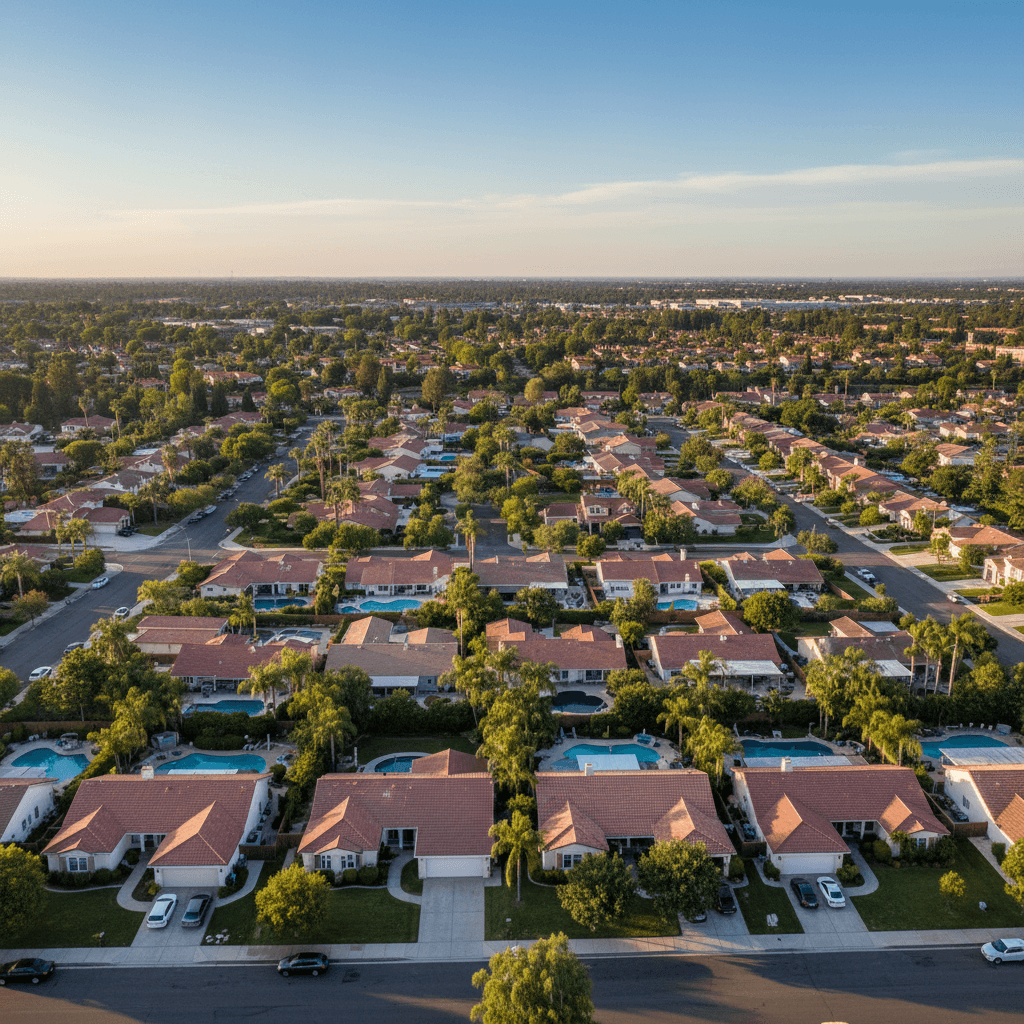
Everyone is waiting for the "pivot"—the moment the Fed decides inflation is under control and starts cutting rates. When this happens, it's like opening the floodgates.
However, there's a catch. When rates drop, demand spikes. When demand spikes, prices usually go up. If you're waiting for rates to drop before you sell, you're going to be competing with every other person who had the same idea. I always tell my students: "Marry the house, date the rate." But for a seller, the goal is to exit when you have the most leverage. Sometimes that's right before everyone else jumps back into the pool.
5 Common Mistakes Sellers Make During Fed Volatility
Over my 20-year career, I've made plenty of mistakes—it's how I learned to be the expert I am today. Here are the biggest blunders I see homeowners make when the Fed is making moves:
- Chasing the Market Down: This is the most painful one to watch. A seller prices their home at $600k. The Fed raises rates, and buyers disappear. The seller waits two months, then drops to $580k. But by then, the market has moved to $560k. They are always one step behind.
- Ignoring the "Days on Market" (DOM): In a high-rate environment, the longer your house sits, the "staler" it gets. After 30 days, buyers start wondering what's wrong with it. I've had flips where I've cut the price after just 10 days because I could feel the Fed-induced chill in the air.
- Over-Improving for the Neighborhood: When money is expensive, people want functional, clean, and safe. They might not be willing to pay an extra $50,000 for those Italian marble countertops you just installed if their mortgage payment is already at their limit.
- Refusing to Entertain Cash Offers: I get it, you want the highest possible number. But a "high" offer that requires a 7% mortgage and a 45-day escrow is much riskier than a slightly lower cash offer that closes in 7 days. I've seen hundreds of deals fall out of escrow because the buyer's financing collapsed at the last minute due to a minor rate hike.
- Waiting for the "Perfect" Time: The perfect time was yesterday. The second best time is today. You cannot time the Federal Reserve perfectly. If you need to move, move.
The Bottom Line: Control What You Can Control
The Federal Reserve is going to do what it's going to do. You can't control Jerome Powell, and you can't control global inflation. But you can control how you respond to it.
If you're feeling overwhelmed by the headlines, the fluctuating rates, and the uncertainty of the market, you don't have to go it alone. I've been through the ups and downs of the 2008 crash, the 2020 boom, and everything in between. I know what it's like to have a property you need to move and a market that feels like it's working against you.
That's exactly why I started Tarek Buys Houses. I wanted to give homeowners a way to bypass the "Fed noise." When I make you an offer, I'm not looking at what the interest rates did yesterday or what they might do tomorrow. I'm looking at the potential of your property and how I can help you move on to your next chapter without the stress of open houses, repairs, or deals falling through because of a bank.
Whether you're in Long Beach or anywhere else in our service areas, we are here to help.
Ready to see what your house is worth in today's market—without the Fed-induced headaches?
Get your fair, all-cash offer at TarekBuysHouses.com or give us a call at (866) 407-3411. Let's get your house sold so you can start your next big adventure!
"Don't let the market dictate your life. Take action, make a plan, and move forward. I'm here to help you do just that." — Tarek El Moussa
Frequently Asked Questions
## How exactly does a Fed rate hike affect my home's value?
Directly, it doesn't change the physical value of your home. Indirectly, it changes everything. When the Fed raises the Federal Funds Rate, mortgage lenders raise their rates to maintain their profit margins. This reduces the "purchasing power" of buyers. For every 1% increase in mortgage rates, a buyer loses about 10% of their buying power. So, a buyer who could afford a $500,000 home at 3% can only afford about $450,000 at 4%. As a seller, if your buyers can't afford the price, you eventually have to lower it to meet the market demand.
## Should I wait until the Fed lowers rates to sell my house?
This is a double-edged sword. If you wait for rates to drop, you might get a higher price, but you'll also face significantly more competition from other sellers who were waiting for the same thing. Furthermore, if you are planning to buy another home after you sell, you'll be buying in a more expensive market with more bidding wars. Sometimes, selling when rates are higher means you have less competition and can negotiate a better deal on your next property. It's about looking at your total financial picture, not just one side of the transaction.
## Why are cash offers better when the Fed is being unpredictable?
When the Fed is active, the "mortgage contingency" becomes the scariest part of a contract. A buyer might be pre-approved at a 6.5% rate, but if the Fed makes an announcement and rates jump to 7.2% while they are in escrow, they might no longer qualify for the loan. Their "debt-to-income" ratio gets blown out of the water, and the deal dies. A cash offer bypasses the bank entirely. There's no appraisal, no lender underwriting, and no Fed-related drama. It's the fastest way to ensure your "sold" sign actually stays in the yard.
## Does the Fed affect the local market in California specifically?
Absolutely, and often more intensely than in other states. Because California markets like Los Angeles and Oakland have higher median home prices, the impact of a rate hike is magnified. A 1% jump on a $1,000,000 mortgage is a much bigger hit to a family's monthly budget than a 1% jump on a $200,000 mortgage in the Midwest. This makes California homeowners particularly sensitive to what the Fed is doing. When rates go up, the "cooling" effect in places like Riverside or Stockton happens much faster.
## What is a "Rate Buy-Down" and should I offer one?
A rate buy-down is when the seller pays an upfront fee (points) to the buyer's lender to lower the buyer's interest rate for a set period (usually the first 1-3 years). For example, in a "2-1 buy-down," the buyer's rate is 2% lower the first year and 1% lower the second year. As a seller, this can be a much more powerful tool than a simple price cut. It makes the monthly payment, with the hope that they can refinance later when the Fed eventually lowers rates. It shows you're a serious seller who understands the current economic climate.
## Will the Fed cause a housing market crash like 2008?
While nobody has a crystal ball, the fundamentals today are very different than they were in 2008. Back then, we had subprime loans and an oversupply of houses. Today, we have the opposite: very strict lending standards and a massive undersupply of homes. The Fed is trying to achieve a "soft landing"—slowing the economy down without crashing it. Even if prices dip slightly due to high rates, the lack of inventory usually keeps the bottom from falling out. However, for individual sellers who need to move quickly, "waiting it out" isn't always an option.