
Cash Offers · · 11 min read
How Cash Home Buyers Determine Your Home's Value
 Tarek El Moussa · Host of HGTV's Flip or Flop · 20+ Years in Real Estate
How Cash Home Buyers Determine Your Home's Value
I still remember my first big flip back in 2008. The world was falling apart, the housing market was a mess, and I was standing in front of a dilapidated house in Santa Ana with every penny I had on the line. I didn't have a fancy appraisal or a bank loan backing me up; I had to figure out, to the dollar, what that house was worth in its current state and what it could be worth if I poured my heart into it. That day, I learned the secret math that separates the pros from the amateurs, and it's the same formula I've used for over 1,000 houses since.
If you've ever wondered how a guy like me looks at a property and comes up with a cash offer, you're in the right place. Most people think it's a guessing game, or worse, that we're just throwing out lowball numbers to see what sticks. That couldn't be further from the truth. In the world of professional real estate investing—the world you see on Flipping 101—valuation is a science.
In this guide, I'm going to pull back the curtain. I want to show you exactly how my team and I determine your home's value so you can make the best decision for your family, whether you're looking to sell your house fast in Santa Ana or just trying to understand your options in today's shifting market.
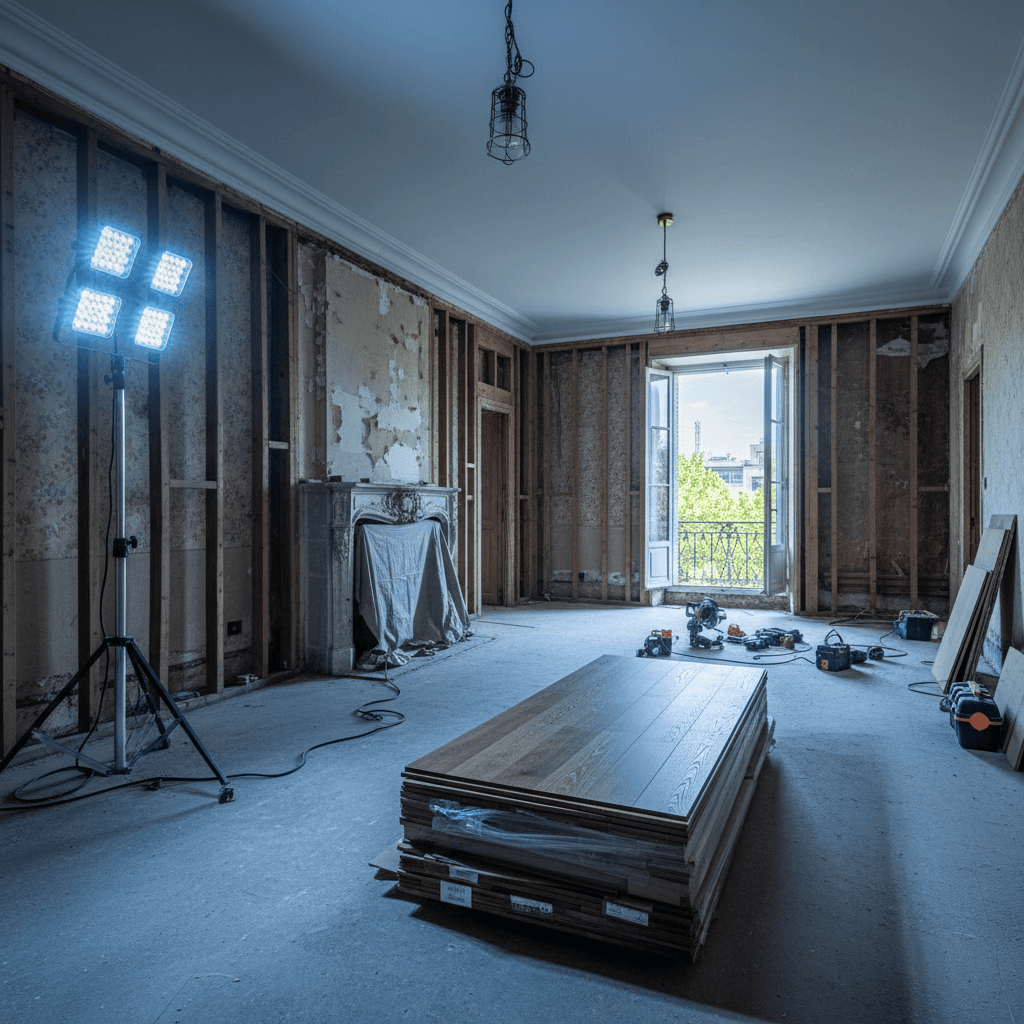
The Foundation: The ARV (After Repair Value)
The most important acronym in my vocabulary isn't ROA or ROI—it's ARV. After Repair Value is the gold standard for cash buyers. It represents what your home would be worth if it were fully renovated to 2024 standards, sitting on the market with a "Coming Soon" sign.
When I walk into a house, I'm not just looking at the cracked tile or the 1970s shag carpet. I'm looking through the walls. I'm imagining the open-concept kitchen, the quartz countertops, and the luxury vinyl plank flooring. To get this number, we look at "comps" (comparable sales).
How We Pick Comps
We don't just look at any house in your zip code. We look for:
- Proximity: Usually within a half-mile radius.
- Recency: Houses that sold in the last 90 days. Markets move fast!
- Similarity: Same square footage (within 10-15%), same bedroom/bathroom count, and similar lot size.
If a fully renovated house down the street sold for $700,000 last month, that's our North Star. That is the ARV.
"You can't fall in love with a house before you know the numbers. The numbers are the only thing that won't lie to you." — Tarek El Moussa
The "Dirty" Work: Estimating Repair Costs
Once we have the ARV, we have to look at the reality of the situation. This is where most homeowners get overwhelmed, and honestly, I don't blame them. Construction is a headache!
When a cash buyer evaluates your home, they are calculating the "Cost of Goods Sold." This isn't just a gallon of paint and some flowers. It includes:
- Structural & Mechanical: Roof, HVAC, plumbing, and electrical. These are the "unsexy" costs that eat up budgets.
- Cosmetic: Kitchens, baths, flooring, and paint.
- Holding Costs: While we're fixing the house, we're paying taxes, insurance, and utilities.
- Selling Costs: When we eventually sell the renovated house, we pay 5-6% in Realtor commissions and closing costs.
If you're trying to sell your house fast in San Bernardino, you might have a house that needs $80,000 in work. A traditional buyer using a bank loan likely won't get approved because the house "won't appraise" in its current condition. As a cash buyer, I take that risk on so you don't have to.
The Investor's Formula: The 70% Rule (Modified)
You might have heard of the "70% Rule" on TV. It's a classic industry standard that says an investor should pay 70% of the ARV, minus repairs.
Formula: (ARV x 0.70) - Repairs = Maximum Allowable Offer (MAO)
However, in high-demand markets like Southern California, that 70% often moves to 75% or even 80% because the margins are tighter and the demand is higher.
Let's do a quick example:
- ARV: $600,000
- Repairs needed: $75,000
- Formula (at 75%): ($600,000 x 0.75) = $450,000
- Minus Repairs: $450,000 - $75,000 = $375,000 Offer
Why the 25-30% haircut? That covers our profit, our risk, our holding costs, and the commissions we pay later. It's the price of convenience and speed. You get your money in days, and I get a project that (hopefully) keeps my crew working.
Speed, Convenience, and the "As-Is" Factor
When we determine value, we also factor in the Value of Time.
If you list your home traditionally, you're looking at:
- Cleaning and staging (2 weeks)
- Showings and open houses (1-4 weeks)
- Negotiating an offer (1 week)
- The buyer's inspection and appraisal period (3 weeks)
- The buyer's loan funding (2 weeks)
That's 3 months of mortgage payments, taxes, and stress. If you need to sell your house fast in San Diego, you might not have 90 days. A cash buyer provides a "certainty premium." We value the fact that we can close in as little as 7 days with no contingencies.
Pro Tip: When comparing a cash offer to a traditional listing, always subtract 10% from the "listing price" to account for commissions, closing costs, and seller concessions. That's your true "net" number.
Market Conditions and External Factors

The value of a home isn't just about the four walls; it's about the world outside. When my team looks at a property, we look at:
1. Inventory Levels
In a "Seller's Market" (low inventory), we can be more aggressive with our offers because we know the finished product will sell instantly. In a "Buyer's Market" (high inventory), we have to be more cautious.
2. Interest Rates
Even though I'm buying with cash, interest rates affect my ARV. If rates are 8%, fewer people can afford to buy the house from me once I'm done fixing it. That means the exit price might be lower, which affects what I can pay you today.
3. Neighborhood Trends
Is the neighborhood "turning"? Are people moving into Oakland and renovating the older Victorians? If we see a trend of high-end flips in the area, it gives us the confidence to offer you more because the "ceiling" for the neighborhood is rising.
4 Common Mistakes Homeowners Make When Valuing Their Home
I've seen it all on Flip or Flop. Homeowners often get stuck on numbers that don't actually exist. Here are the big ones:
1. Relying on "Zestimates"
Zillow is a great tool, but it's an algorithm. It hasn't been inside your house. It doesn't know that your water heater is leaking or that you have the best view on the block. An algorithm is a starting point, not a final answer.
2. Adding Up Every Dollar Spent
I once met a homeowner who spent $40,000 on a custom, built-in saltwater aquarium. He thought it added $40,000 to the home's value. In reality, most buyers saw it as a maintenance nightmare and wanted it removed. You get value from functional upgrades (kitchens, roofs), not personal ones.
3. Comparing to "Active" Listings
If your neighbor is asking $800,000 for their house, that doesn't mean it's worth $800,000. It means they want $800,000. Always look at "Solds." The market only cares what someone actually paid.
4. Ignoring the "Cost of Selling"
If I offer you $400,000 cash, you get $400,000 (minus minor closing fees). If a Realtor says they can sell it for $430,000, you have to subtract the $25,000 commission, the $5,000 in closing costs, and the $10,000 the buyer will ask for in repairs after the inspection. You're netting $390,000 and waiting three months for it.
The Tarek El Moussa Difference
I've built my career on being "The We Buy Houses Guy" because I actually care about the communities I'm buying. Whether we're filming a transformation for HGTV or just doing a standard investment, my goal is always to create a win-win situation.
I know that selling a home is emotional. It's where you raised your kids, or maybe it's a property that's become a burden during a hard time. My team at Tarek Buys Houses isn't here to take advantage of you—we're here to provide a solution that the traditional market can't.
If you're tired of the "for sale" signs, the endless showings, and the uncertainty of whether a buyer's loan will actually go through, let's talk. I'll give you a fair, honest assessment of what your home is worth today, in cash.
No repairs. No commissions. No BS.
Ready to see what your cash offer looks like? It takes less than 30 seconds to get started.
Get Your Fair Cash Offer
Or call us directly at (866) 407-3411. Let's get you moving!
Frequently Asked Questions
How do you calculate the repair estimate without a formal inspection?
Experience is the short answer. After doing this over 1,000 times, I can walk through a 1,500-square-foot house and know within 10 minutes if it's a $50k, $80k, or $120k renovation. We look at the age of the roof, the state of the electrical panel, and the quality of the foundation. While we do a "walkthrough," it's much faster and less formal than a bank inspection. We take the "risk" of the unknown, which is why we can move so quickly. If we find a surprise later, that's on us, not you.
Will I get a fair price if my house is in "good" condition?
Absolutely. Cash buyers aren't just looking for "trash" houses. Many people who want to sell your house fast in Long Beach have perfectly fine homes but need to move for a job, are dealing with a divorce, or inherited a property they don't want to manage. In these cases, our repair budget is lower, which means our offer is higher. We look at the "opportunity cost" for you—is the ease of a cash sale worth more than the potentially slightly higher price of a months-long traditional sale?
Does a cash offer mean I have to move out immediately?
Not at all. This is one of the biggest misconceptions. When you work with a professional cash buyer, you control the timeline. I've had sellers who needed to close in 5 days to avoid foreclosure, and I've had others who wanted to sign the paperwork today but not move out for two months while their new home was being built. We call this a "leaseback" or just a flexible closing date. We work on your schedule, not the bank's.
Why is your offer lower than the tax assessment or Zillow?
Tax assessments are often based on outdated data or "mass appraisal" techniques used by the county for tax purposes—they rarely reflect the true market value of an individual home's condition. Zillow, as mentioned, is a computer model. A cash offer accounts for the "As-Is" condition, meaning you don't have to pick up a paintbrush, hire a contractor, or even clean out the garage. You are trading a portion of the equity for speed, convenience, and the elimination of risk.
What if I have tenants in the property?
This is a huge one! Traditional buyers usually want to live in the house, so they won't buy a property with tenants. This makes it very hard to sell on the MLS. As an investor, I deal with "tenant-occupied" properties all the time. We value the property based on the lease and the condition, and we take over the responsibility of the tenants. You don't have to go through the stress of evictions or lease terminations; we handle all of that after the close.